
Bloomington Property Records
Bloomington property records are maintained by the Monroe County Recorder's Office, which handles all deeds, mortgages, liens, and other recorded real estate documents for the city. Bloomington is the county seat of Monroe County, so the recording office serves both the city and the surrounding county. You can access Bloomington property records online through the recorder's free search portal, check parcel data and assessed values through state tools, or visit the Monroe County courthouse for in-person research and copies of recorded instruments.
Bloomington Property Records
Monroe County Recorder for Bloomington Property Records
The Monroe County Recorder's Office handles all recorded real estate instruments for Bloomington. The recorder's website at Monroe County Recorder has current fees, office hours, and recording requirements. You can search Bloomington property records online through the recorder's access portal at Access Records Online. This free tool lets you search by name, document type, or recording date and view scanned document images for digitized records.
The recorder's office is the official keeper of all deed and title instruments for Bloomington. This includes warranty deeds, quitclaim deeds, mortgages, mortgage releases, mechanic's liens, easements, subdivision plats, and other instruments that affect real property ownership. Every recorded document gets a permanent document number and is indexed under the names of all parties, making it the foundation of any title search on Bloomington property.
Bloomington sits at the center of Monroe County, and the recorder's office serves the full county. Because Bloomington is the county seat, the recorder's office is conveniently located for city residents. Walk-in service is available during regular weekday business hours. Staff can assist with name searches, copy requests, and guidance on recording new documents.
For assessed values on Bloomington properties, the Monroe County Assessor maintains parcel data for all city parcels. The statewide DLGF Assessed Value Search is a free tool to look up current assessed values by parcel number. The DLGF Tax Bill Search gives access to current and prior year tax bills for any Bloomington parcel.
Search Bloomington Property Records Online
The Monroe County Recorder's online access tool is the primary portal for searching Bloomington property records. Enter a grantor or grantee name, choose a document type, or set a date range to find recorded instruments. The system returns matching documents with recording numbers, dates, and links to images where available. This tool is free and does not require an account to use.
The City of Bloomington website links to Planning and Transportation, the City Assessor, and Handy Home housing program resources relevant to Bloomington property records.
Bloomington's city website connects residents to planning, zoning, and housing program records that complement the Monroe County Recorder's Bloomington property records database.
The City of Bloomington maintains its own set of property-related records through city departments. The Planning and Transportation Department handles zoning determinations, subdivision plats, variance records, and development permits. If you need zoning history or permit data on a Bloomington property, contact Planning and Transportation through the city website at bloomington.in.gov. The City Assessor maintains local assessment records and can answer questions about property classification within the city.
The Handy Home program is a city-run housing initiative that works with properties in Bloomington. It is not a recorder function, but it maintains records on assisted housing transactions and rehabilitation projects. If a property has been part of any city housing program, those program records may supplement what the Monroe County Recorder holds on the deed history.
Indiana State Archives and Historical Bloomington Land Records
For historical Bloomington property records dating back to the 19th century, the Indiana State Archives is the primary source. Early Monroe County land records, including original land grants and plat books, are held at the archives. These older documents are not available through the online county recorder system. You must contact the archives directly to request access, either in person in Indianapolis or through written or email requests.
The Indiana State Archives holds historical land records including older Monroe County and Bloomington property records not available online.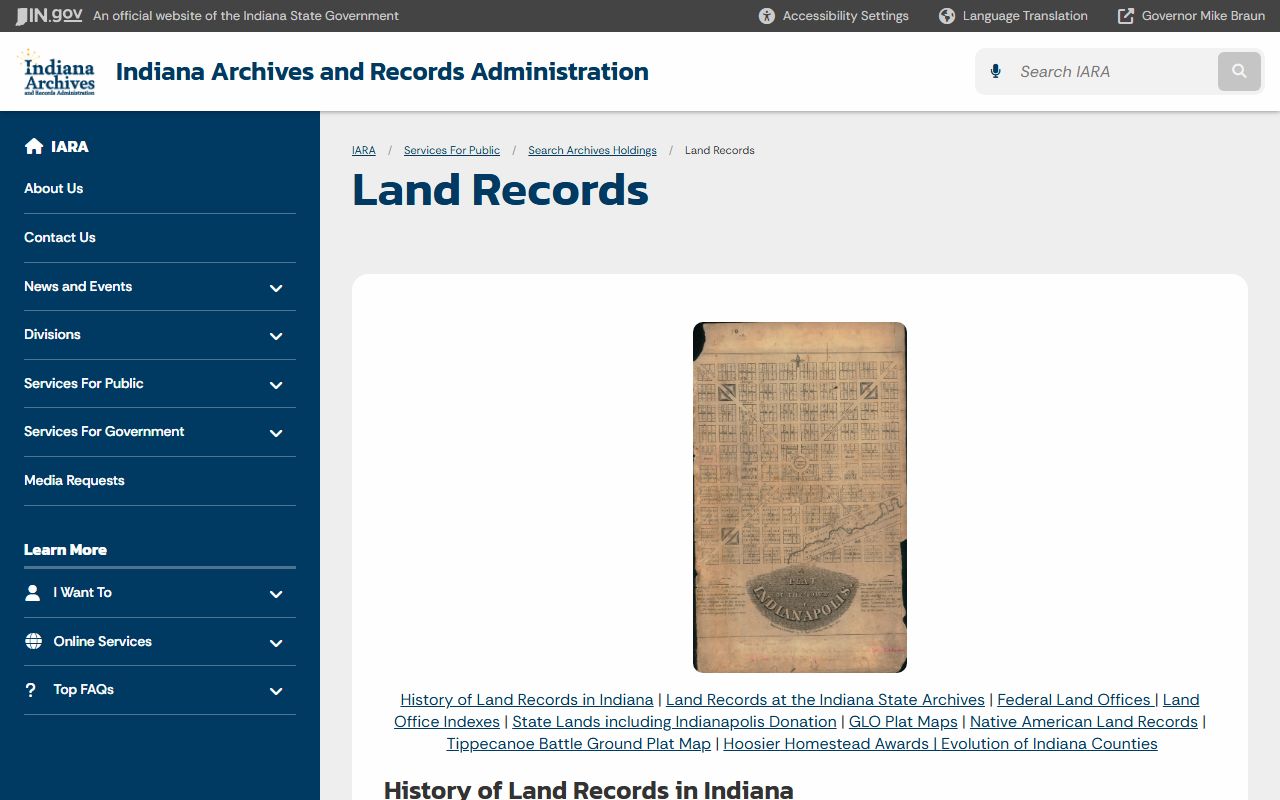
The Indiana State Archives is the go-to source for early Bloomington property records, including pre-county deed books and land patents that predate modern digital recording systems.
The Indiana Recorders Association at indianarecorders.org provides a statewide perspective on recording law and procedures. It includes contact information for all county recorder offices, resources on e-recording, and guidance on document preparation. For questions about recording requirements in Monroe County that go beyond what the local office can answer, the association's resources are a good reference.
The Beacon/Schneider GIS platform covers Monroe County and provides interactive parcel maps and ownership data for Bloomington. The Indiana Gateway portal also has county finance and tax data for Monroe County. Together, these tools give a broad picture of Bloomington property records from both a title and tax perspective.
Recording Property Documents in Bloomington
Recording a deed or other real estate document for Bloomington property follows Indiana's standard three-step process. The County Assessor reviews and stamps the document first. The County Auditor then transfers and endorses it. The County Recorder records the document last and assigns a permanent number. Fees are paid at both the Auditor's and Recorder's offices. The process applies to all deeds, mortgages, and other instruments that affect real property title in Bloomington.
All documents must meet the requirements set under IC 36-2-11 and IC 32-21-2. White paper no larger than 8.5 by 14 inches is required. The first and last pages must have two-inch top and bottom margins. Font must be 10-point or larger in black ink. Social Security numbers must be redacted. A "Prepared by" statement is required on all documents. A Sales Disclosure Form must accompany every deed, and the Auditor's endorsement is needed on all deed transfers before the Recorder accepts them.
Statewide fees apply to Bloomington recordings. Deeds cost $25. Mortgages cost $55. Other documents are $25 each. Oversized pages add $5 per page. Copies are $1 per standard page and $5 for larger formats. Certified copies add $5 to the total fee. Electronic recording through approved vendors is accepted at the Monroe County Recorder's Office.
Note: Property tax assessment for Bloomington parcels is governed by IC 6-1.1, which covers assessment, appeals, and tax payment procedures for all Indiana counties including Monroe.
Bloomington Property Tax and Additional Resources
The Monroe County Assessor sets assessed values for all Bloomington parcels. If you believe the value is wrong, you can appeal through the Property Tax Assessment Board of Appeals. The process is governed by IC 6-1.1. The assessor's office can explain the timeline and required forms for an appeal in Monroe County.
The Indiana Gateway Tax Bill Lookup lets you check current and prior year tax bills for Bloomington properties using the parcel number. This is a useful verification step before any real estate transaction. The Indiana Gateway Taxpayer Portal at gateway.ifionline.org/public/taxpayer/ also gives property owners access to their county tax and assessment data directly.
The Doxpop subscription service gives access to recorded documents from all Indiana counties, including Monroe. It is widely used by title companies and attorneys for cross-county research. For routine public searches on Bloomington property records, the free Monroe County recorder portal is the primary tool and is sufficient for most needs.
Nearby Indiana Cities
Bloomington is in south-central Indiana. Nearby qualifying cities have their own county recorder resources for local property record research.