
Scott County Property Records
Scott County property records are filed with the County Recorder in Scottsburg, where deeds, mortgages, liens, and related instruments become part of the permanent public record. Whether you need to confirm ownership, check for open liens, or trace a chain of title on a Scott County parcel, this page covers where to search, what documents the recorder accepts, how recording works, and what fees apply across the county.
Scott County Property Records
Scott County Recorder Office
The Scott County Recorder holds a constitutional office in Scottsburg and is responsible for accepting, indexing, and preserving all instruments affecting real property within the county. This duty comes directly from Indiana Code 36-2-11, which sets out the recorder's function across all 92 Indiana counties. Documents submitted to the Scott County Recorder are time-stamped and assigned a permanent instrument number, then scanned and indexed before the original is returned to the submitting party.
The office records a wide range of instruments. Deeds, mortgages, releases, liens, easements, leases, powers of attorney, real estate contracts, plats, surveys, military discharges, and other instruments all come through the recorder's office. Each one becomes a public record once filed. Staff can look up records by name or instrument number but do not provide title searches or legal advice.
Scott County is a smaller county with a population of about 24,000, but the recorder's office handles the full scope of property documents that come with a working real estate market. For older historical land records, the Indiana State Archives holds deed books, survey plats, and early land grants that may predate the modern index. Researchers can search the Archives holdings online or contact staff for retrieval assistance.
The Indiana Recorders Association lists contact details for county recorders across the state. If you need the current phone number, hours, or mailing address for the Scott County Recorder, the Association's directory is a good starting point when the county website is not accessible.
Search Scott County Recorded Documents Online
The primary statewide tool for searching Scott County deed records and mortgages is Doxpop. Doxpop indexes recorded instruments from county recorders across Indiana, including Scott County, and lets you search by party name, document type, or date range. Images of recorded documents are available for a per-page fee. This is the most accessible online option for searching Scott County land records without a trip to the courthouse in Scottsburg.
Parcel maps and ownership data for Scott County are available through the Beacon GIS platform. You can search by owner name, address, or parcel number and view parcel boundaries, assessed values, and related property details on an interactive map. Beacon pulls data from county GIS and assessor files, so the information stays relatively current.
The Indiana Gateway Taxpayer Portal gives you access to Scott County property tax data by parcel number. You can look up current and past tax bills, deductions, and payment history for any Scott County parcel through this free state-run tool.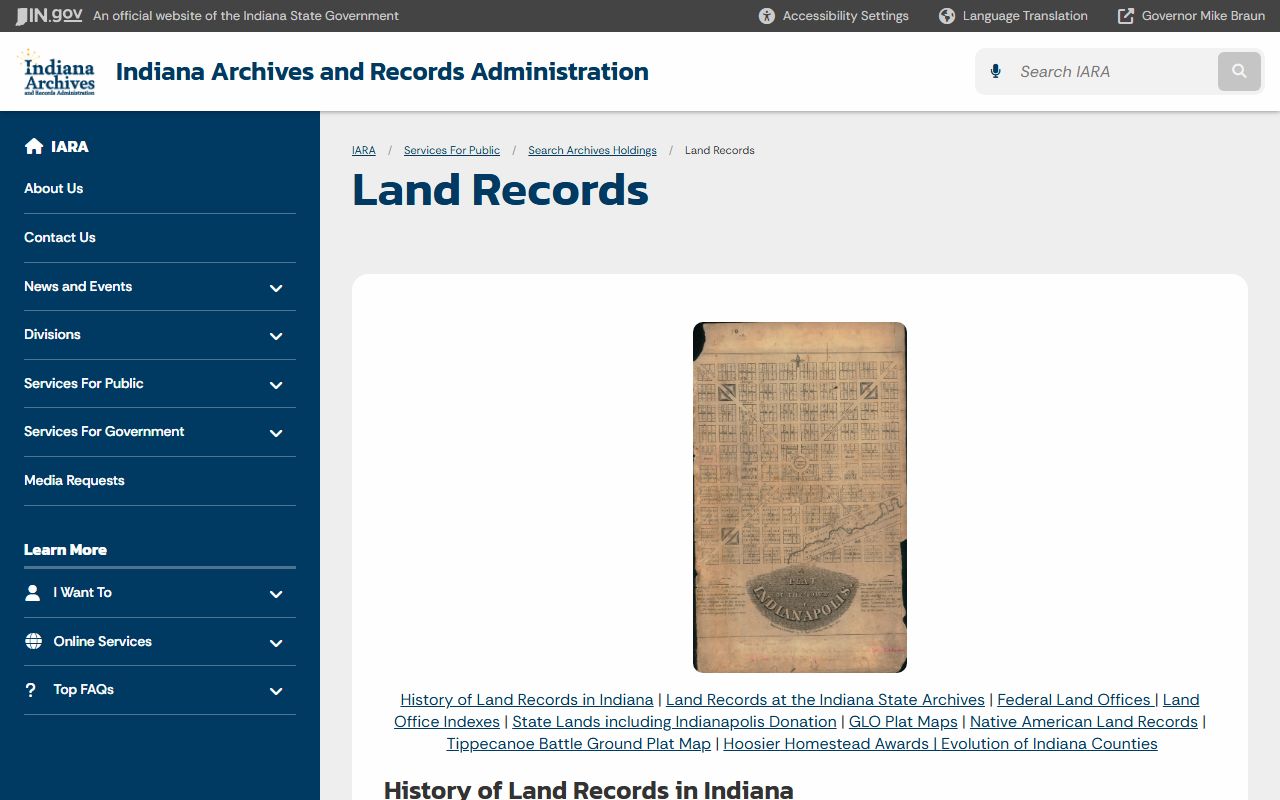 The Indiana State Archives holds early Scott County land records that go back well before the county's digital index begins. These older records can help with genealogy, title research, or historical property inquiries that fall outside the range of the recorder's current online system.
How Recording Works in Scott County
Indiana requires all instruments submitted to a county recorder to meet a uniform set of standards. These apply in Scott County just as they do in any other county. Documents must be printed in black on white paper no wider than 8.5 inches and no longer than 14 inches. Paper weight must be at least 20 pounds. Text must be at least 10-point font. Handwriting is not acceptable on instruments affecting real property.
Margins matter. The first page must have a 2-inch top margin so the recorder's stamp fits without covering text. The last page needs a 2-inch bottom margin. Side margins must be at least half an inch throughout. Every document must include a "Prepared by" statement giving the drafter's name and address. Signatures must have printed or typed names beneath them that match the signed name exactly. These format rules exist to make documents legible and scannable over time.
Deeds must be notarized and must include the grantee's mailing address. Social Security numbers must be fully removed before any document is submitted for recording under Indiana Code 32-21-2. A legal description of the property is required on every instrument affecting real estate. The description must be specific enough to identify the parcel on the ground.
Deed recording in Scott County follows a three-step process. First, the County Assessor reviews and stamps the deed. Second, the County Auditor transfers the property on the tax rolls, endorses the document, and collects the transfer fee. Third, the Recorder records the document and collects the recording fee. A completed Sales Disclosure form must accompany every deed at the Auditor's window. Documents that do not meet format requirements are still recorded but incur a non-conforming fee of $1 per non-conforming page.
Property Tax and Assessment in Scott County
Property taxes for Scott County parcels are managed by the County Assessor and County Auditor. The Assessor sets the assessed value for each parcel under Indiana Code 6-1.1, and the Auditor applies local levy rates to calculate the annual tax bill. Taxes are due in two installments each year. Unpaid taxes become a lien against the property, which must be resolved before the property can be sold with clear title.
The DLGF Assessed Value Search lets you look up the current assessed value for any Scott County parcel by owner name or parcel number. This tool also shows any deductions or exemptions that apply to the parcel. If you believe a Scott County property has been over-assessed, you can file a formal appeal with the County Assessor. Appeals not resolved at the county level go to the Indiana Board of Tax Review.
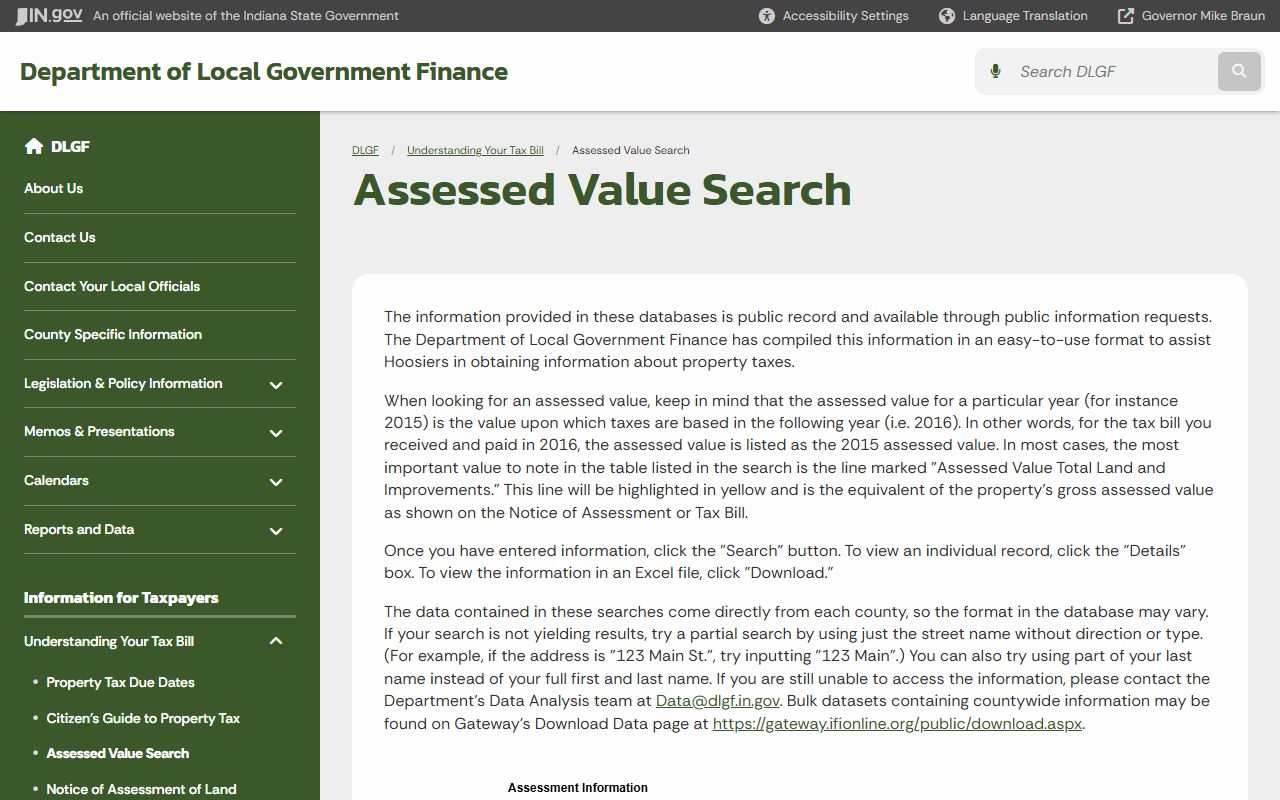 The DLGF Tax Bill Search lets you pull up current and prior-year tax bills for Scott County parcels by parcel number. This is useful for verifying that taxes are paid before a real estate closing or for checking the tax history on a property you are considering buying.
Scott County Recording Fees and Copy Costs
Recording fees in Scott County follow Indiana's statewide schedule set by IC 36-2-7-10.5. Deeds cost $25 to record. Mortgages cost $55. Releases, assignments, affidavits, and most other instruments cost $25 each. Pages larger than 9 by 15 inches add $5 per oversized page above the base fee. Documents that do not conform to the standard format requirements are recorded but cost an extra $1 per non-conforming page.
Copies of recorded documents cost $1 per page for standard sizes up to 11 by 17 inches. Larger copies cost $5 per page. Certified copies add $5 on top of the per-page copy fee. Mail requests to the Scott County Recorder require a written request, payment, and a stamped self-addressed return envelope. Fees are not refunded once a document has been submitted, even if the document needs to be corrected and resubmitted.
Title companies and lenders who record frequently may prefer e-recording. Scott County accepts electronic document submissions through vendors such as Simplifile (800-460-5657), CSC eRecording (866-652-0111), and eRecording Partners Network (888-325-3365). E-recording lets documents be submitted and processed without a physical trip to the courthouse in Scottsburg.
Note: Contact the Scott County Recorder directly to confirm current hours and any local procedures before mailing documents or making an in-person visit.Nearby Indiana Counties
Scott County borders several counties in southeastern Indiana. Property records for parcels near county lines may require searches at more than one recorder's office.